
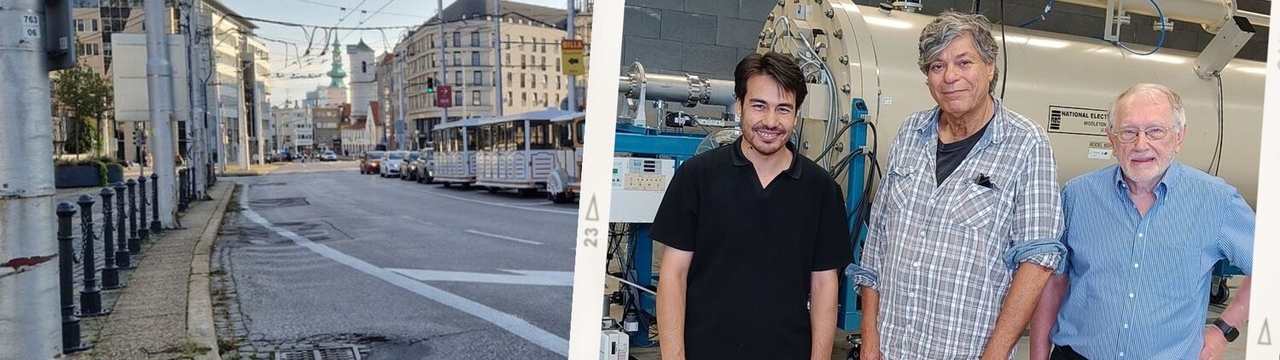
Slovakia: A Small Country with Big Opportunities
Meet Mohammad Alem Sultani, a young researcher from Afghanistan whose journey led him from a childhood marked by war and hardship to earning a PhD in Nuclear Physics at Comenius University in Bratislava. What began with studying under the shade of trees in his village has grown into a career in cutting-edge research and teaching in Slovakia. His story is a powerful example of how education, resilience, and opportunity can transform lives — and how Slovakia is becoming a home for ambitious researchers from around the world.
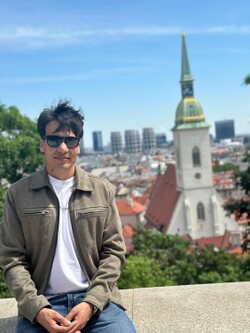 Slovakia, a small country in the heart of Europe may be unknown to many, yet it is full of opportunities and kind-hearted people. When friends asked me, “Where are you now?” and I replied, “Slovakia,” they often said, “Ah, you mean Czechoslovakia?” I laughed. For many in Afghanistan, Czechoslovakia is remembered only for its trolleybuses in Kabul or its luxury military boots. I never imagined that one day Slovakia would become my second home and the place that would change my life forever.
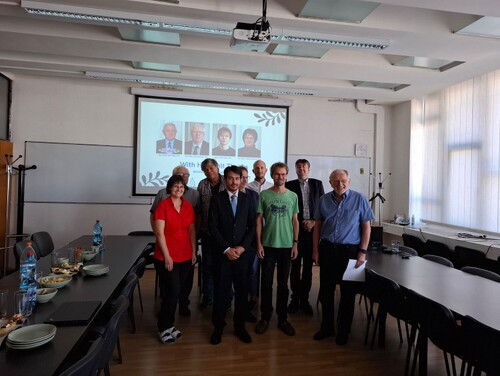
When I was born, no educated person was present to record my birthday, so the exact date remains unknown. Thirty years later, I have achieved the highest academic degree. Today, I successfully defended my PhD thesis in Nuclear Physics at Comenius University in Bratislava, becoming the first person in my family to attain higher education.
It has been 23 years since I first stepped into a classroom. For a boy born in war-torn Afghanistan, the path was anything but easy. From the moment I opened my eyes, I was surrounded by smoke and gunfire. Childhood, in the true sense of the word, was something I never had. At the age of ten, I was already working alongside my father in the fields. In my village, everyone worked regardless of age just to earn a piece of bread. Many nights, I went to bed hungry.
 Many mornings, I walked to school barefoot. My schoolbooks were incomplete; often, I had no notebook or pen. We relied on aid from foreign organizations, and only UNICEF came every year. I still remember the pure joy of holding a simple blue notebook or a new pencil. We had few teachers, no proper classrooms, and often studied under the shade of trees. After primary school, the nearest high school was a two-hour bicycle ride from our village. Each day, I either pedalled or walked, carrying nothing more than a piece of dry bread and a bottle of yogurt drink. Luxuries like sandwiches or snacks were unimaginable.
Even so, I completed high school, often ranking second or third in my class. Physics fascinated me, so when it came time for university entrance exams, I chose this field. I was admitted to Herat University, far in western Afghanistan, and could only visit my family once a year. The classes were not perfect, but I pushed myself studying online, improving my English, and striving to learn as much as possible. Eventually, I graduated at the top of my class.
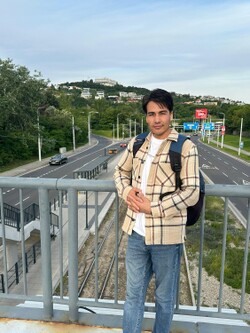 Later, I won a highly competitive scholarship to India for my master’s degree an opportunity for which I remain deeply grateful to the people and government of India.
But I dreamed bigger: a PhD. After many applications, I was fortunate to be awarded five scholarships in Europe. I chose Slovakia. At Comenius University, I found not only academic support but also kindness, encouragement, and a new perspective on life.
Today, I stand as a Doctor, the first PhD holder in my small village. My brothers and sisters never had the chance to study. For me, this is more than an academic achievement; it is a transformation of my life, proof that education can break barriers, and a reminder that even in the harshest conditions, hope can take root and grow.
I would like to sincerely thank everyone who has supported me on this journey and helped me reach this moment. In particular, I am deeply grateful to Comenius University and to the government of Slovakia for their generous support of international students and researchers.
I have accepted a position as a lecturer and researcher at Comenius University in Bratislava, where I am deeply grateful for the opportunity to continue my research and teaching, and I look forward to contributing to the scientific community and inspiring future generations.

SAIA, n. o.
(Slovak Academic Information Agency)
This website is administered by SAIA and has been created and maintained with the financial contribution of the Ministry of Education, Research, Development and Youth of the Slovak Republic.
Contact us
Sasinkova 10, 812 20 Bratislava 1
Slovak Republic
© SAIA, n.o. (Slovak Academic Information Agency). All rights reserved.
Runs with MODx | Created by STUDIO MAX MEDIA